Mostrando entradas con la etiqueta adventure. Mostrar todas las entradas

domingo, 29 de enero de 2017

The Hobbit, by J.R.R. Tolkien

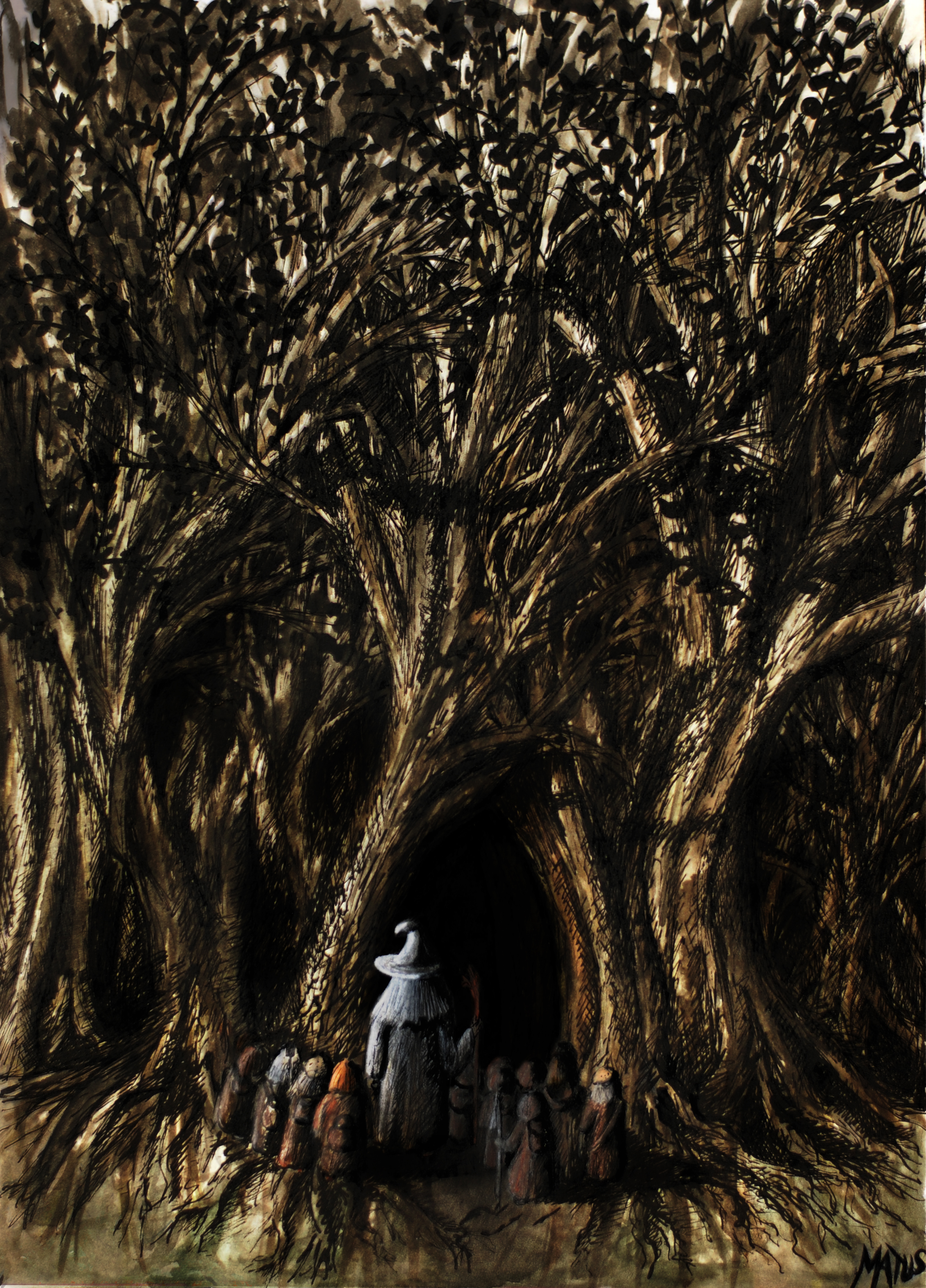
It was at this point that Bilbo stopped. Going on from there was the bravest thing he ever did. The tremendous things that happened afterwards were nothing compared to it. He fought the real battle in the tunnel alone, before he ever saw the vast danger that lay in wait. At any rate after a short halt go on he did; and you can picture him coming to the end of the tunnel, an opening of much the same size and shape as the door above.

If you have already read the book, this is for you:

Treading again on a long-ago followed path is a bittersweet experience. Familiarity provokes both relax and pleasure, since you are not eager to know what comes next (in general terms, you already know), but you're able to enjoy the details and sights of the trip. Finishing and farewells when you are in a more advanced moment of your life strike a different note. Not mere adventure -a mirror for your present context. Heraclitus was right, and books are rivers indeed. Go bathing, it'll do you good.

If you haven't, read this:

Films, merchandising, games and all have given people the idea that all Tolkien is connected to the geekish world around the turning of the century. Minding that this 'prequel' to The Lord of the Rings was actually written on the verge of the second world war is an interesting exercise. That is the world of which this book is both an echo and a escape. Being familiar with the history of English language (by the way, if you can spare a minute, this) will as well give you a sight of the depth of Tolkien's craftmanship.

You are over 16? Waste not a minute, and grab a copy. You're already late.


miércoles, 17 de febrero de 2016

The Riddle of the Sands, by Erskine Childers

'Where am I to steer for?' I asked, wildly. 
'Oh, don't trouble, I'll take her now,' he replied. I felt it was time to make my position clear. 
'I'm an utter duffer at sailing,' I began. 'You'll have a lot to teach me, or one of these days I shall be wrecking you. You see, there's always been a crew'—
'Crew!'—with sovereign contempt—'why, the whole fun of the thing is to do everything oneself.' 
'Well, I've felt in the way the whole morning.' 
'I'm awfully sorry!' His dismay and repentance were comical. 
'Why, it's just the other way; you may be all the use in the world.' He became absent.

I read a positive comment on this adventure book (it read something like 'the first and inspiration of all spies stories'), and started to read it in a moment in which my mood matched the protagonist's. It did contain some additional elements which attracted me, like the British stereotypes, the sea adventure and the mystery factor. But it surprised me in its capability to slowly and surely transport the reader to the feeling and smell and toil of cruising in a small sailboat in the North Sea.

Carruthers is the reader's mirror here, or at least he was my own, but all of the main players in the story are carefully crafted –the work of an artisan. Classical music is an excellent companion to this book, Die Moldau by Smetana being a perfect chioce. Besides, you can get it at the Gutemberg Project and it's an exciting adventure book.
By Scanned by uploader from The Riddle of Erskine Childers ISBN 0-09-128490-2. Original from Hulton Press Library cuttings agency., Public Domain, https://commons.wikimedia.org/w/index.php?curid=43948202